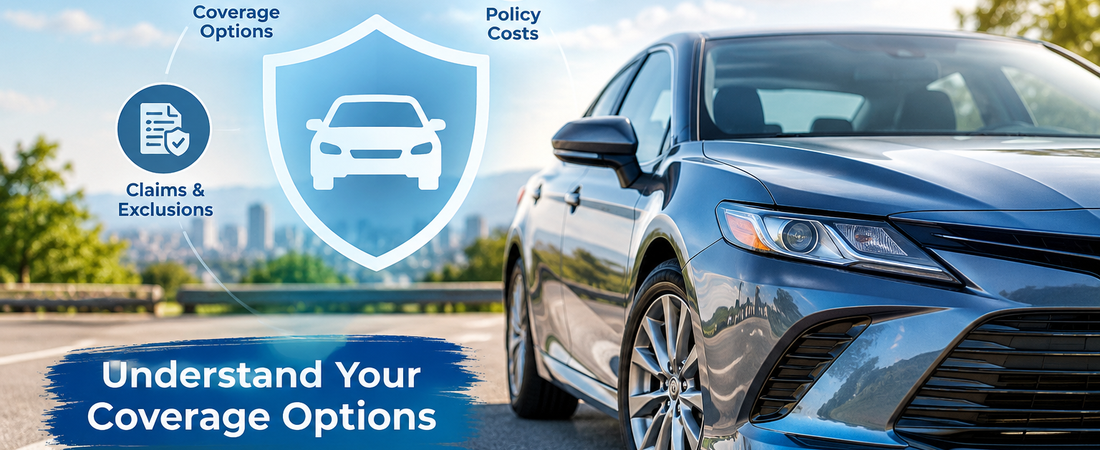
Auto insurance can help drivers manage the financial risks associated with owning and operating a vehicle. Whether you drive every day or only occasionally, understanding how auto insurance works can help you make informed decisions about coverage, policy costs, and potential out-of-pocket expenses.
At SmartQuoteGuide, our goal is to provide educational information that helps readers understand common auto insurance terms, compare available coverage options, and learn what to consider before selecting a policy.
What Is Auto Insurance?
Auto insurance is an agreement between a policyholder and an insurance company. In exchange for premium payments, the insurer provides specified financial protection according to the terms, limits, deductibles, and exclusions outlined in the policy.
Depending on the policy and applicable state requirements, auto insurance may help cover certain expenses related to vehicle accidents, property damage, injuries, theft, or other covered events.
Coverage varies by insurer and policy. Reviewing the details of a policy is important because not every type of loss or expense is automatically covered.
Understanding Common Auto Insurance Coverage Options
Different types of auto insurance provide different forms of protection. The options available to you may depend on your location, vehicle, insurer, and individual circumstances.
1. Liability Coverage
Liability insurance generally helps cover eligible costs when you are legally responsible for injuries to other people or damage to their property in a covered accident.
Most states require drivers to carry certain minimum levels of liability coverage, although requirements differ by state. Minimum limits may not cover every expense associated with a serious accident.
2. Collision Coverage
Collision coverage may help pay for repairs to your vehicle or its actual cash value if it is declared a total loss following a covered collision, subject to the policy terms and deductible.
This coverage may be particularly relevant for drivers who want financial protection for their own vehicle after an accident.
3. Comprehensive Coverage
Comprehensive coverage generally addresses certain non-collision losses, which may include theft, vandalism, fire, hail, or falling objects, depending on the policy.
It is important to review exclusions and deductibles to understand how comprehensive coverage applies to your vehicle.
4. Personal Injury Protection and Medical Payments
Depending on your state and policy, personal injury protection (PIP) or medical payments coverage may help pay eligible medical expenses following a vehicle accident.
These coverages have different rules, limits, and availability. Check your policy and local requirements to understand which benefits apply.
5. Uninsured and Underinsured Motorist Coverage
This coverage may help protect you if you are involved in an accident with a driver who has no insurance or insufficient insurance, subject to applicable law and policy terms.
Availability and requirements vary by state.
What Factors Affect Auto Insurance Costs?
Auto insurance premiums vary from one driver and policy to another. Insurers may consider several factors when calculating a quote.
Common factors include:
- Driving history: Accidents, violations, and claims may affect premiums.
- Location: Traffic conditions, local accident patterns, theft rates, and state regulations may influence costs.
- Vehicle type: The vehicle’s value, repair costs, safety features, and theft risk may affect pricing.
- Coverage limits: Higher limits can increase premiums but may provide greater financial protection.
- Deductibles: Choosing a higher deductible may reduce the premium while increasing the amount you pay out of pocket for certain claims.
- Driving experience: Age, driving experience, and other legally permitted rating factors may affect pricing.
- Discount eligibility: Some insurers offer discounts for qualifying safety features, multiple policies, or other eligible circumstances.
The cheapest policy is not necessarily the most appropriate choice. Compare the premium alongside coverage limits, deductibles, exclusions, and the insurer’s claims procedures.
Understanding Auto Insurance Exclusions
An exclusion is a circumstance, loss, or expense that a policy does not cover. Exclusions can differ between insurers and policy types.
For example, a policy may exclude certain types of vehicle use, intentional damage, or losses that fall outside the selected coverage. Standard auto insurance policies also generally do not cover every possible mechanical failure or routine maintenance expense.
Read the policy documents carefully, including the declarations page, coverage definitions, conditions, and exclusions. If something is unclear, ask the insurer to explain how the provision may affect your situation.
Understanding exclusions before purchasing a policy can help reduce surprises when you need to file a claim.
How Does the Auto Insurance Claims Process Work?
If an accident or other covered event occurs, the claims process typically involves several steps.
- Prioritize safety. Check for injuries, move to a safe location when possible, and contact emergency services if necessary.
- Document the incident. Exchange relevant information with other parties and gather photographs, witness details, and other available evidence when it is safe to do so.
- Contact your insurer. Report the incident promptly and follow the insurer’s instructions.
- Provide requested information. The insurer may request photographs, repair estimates, police reports, or other documentation.
- Review the claim decision. The insurer evaluates the circumstances, applicable coverage, policy limits, deductibles, and exclusions before determining whether and how much it will pay.
- Understand the settlement. Ask questions about the decision, payment amount, repair process, or any expenses that remain your responsibility.
Claim procedures and timelines vary. A claim is not automatically approved simply because it has been submitted.
How to Compare Auto Insurance Options
Before choosing a policy, consider the following steps:
- Compare quotes from multiple insurers using consistent coverage limits and deductibles.
- Review the types of coverage included and any optional protections available.
- Check the deductible that applies to each relevant coverage.
- Read policy exclusions, conditions, and limitations.
- Ask about discounts for which you may qualify.
- Review payment terms and how premiums may change at renewal.
- Consider whether the selected limits reasonably address your potential financial exposure.
Make sure the information you provide when requesting quotes is accurate. This helps insurers assess your circumstances and provide more relevant pricing information.
Frequently Asked Questions
Is auto insurance required?
Most U.S. states require drivers to maintain some form of financial responsibility, commonly including minimum liability insurance. Requirements vary by state, so verify the rules that apply where you live.
Does auto insurance cover every accident?
No. Coverage depends on the policy, the type of coverage purchased, applicable exclusions, deductibles, limits, and the circumstances of the incident.
Why do auto insurance quotes differ?
Insurers may use different pricing methods, eligibility requirements, discounts, and rating factors. Comparing quotes with equivalent coverage details can help you understand the differences.
Can I lower my auto insurance premium?
You may be able to reduce costs by comparing insurers, checking available discounts, reviewing coverage needs, or adjusting deductibles when financially appropriate. Avoid reducing essential protection without understanding the potential consequences.
What should I review before buying a policy?
Review coverage types, limits, deductibles, exclusions, premium payment terms, and claims procedures. Ask the insurer to clarify any provisions you do not understand.
Learn About Auto Insurance Coverage
Understanding auto insurance can help you evaluate policy features, compare costs, and make more informed decisions about your coverage needs. Before purchasing a policy, review the terms carefully and confirm the available options, eligibility requirements, and pricing directly with the insurer.
Use the option below to continue to the relevant auto insurance information or quote experience, where available. Quote availability, eligibility, coverage terms, and pricing depend on the provider and your circumstances.